Search for GI pipe vs brass and you will find plenty of heated opinions and very few useful answers. That is because the comparison is usually framed wrong. On a real water supply job, GI pipes and brass fittings solve different problems — the practical question is not which one to buy, but where each belongs in the same system.
What each material actually is
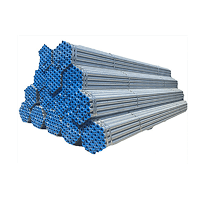
Galvanised iron pipe is mild steel pipe dipped in molten zinc. The zinc coat sacrifices itself to protect the steel underneath, which gives GI pipe excellent mechanical strength at a low price per metre. It is the workhorse for exposed risers, compound mains and structural runs.
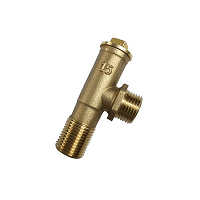
Brass is a copper-zinc alloy machined into precision components — taps, ferrules, adaptors and connectors. Brass does not rust, machines to tight tolerances and seals reliably at threads, which is why brass fittings dominate at connection points, meters and terminal fixtures like the humble brass bibcock.
Cost: per metre vs per joint
GI wins decisively on price over distance. A galvanised line across a compound costs a fraction of any brass-heavy alternative, and for large diameters there is no contest — nobody runs brass pipe across a site.
Brass wins on price per failure avoided. A connection that weeps because a cheap fitting's threads deformed costs far more in rework than the few hundred rupees a quality brass component adds. Spend on brass exactly where the system is most likely to leak: joints, tappings and serviceable connections.
Corrosion and lifespan
This is where the materials genuinely diverge. GI's zinc layer protects only until it is consumed — faster with hard or aggressive water, faster still on hot lines. As zinc depletes, the steel beneath rusts and scales, narrowing the bore over 10 to 20 years of typical service. Brass simply does not rust; decades of service at a tap or meter connection are normal, which is why water boards specify brass at the consumer connection.
- GI: 10-20 years on cold, benign water; noticeably less on hot or aggressive supply.
- Brass: 40+ years at connections and fixtures; the washer wears out long before the metal.
- Never thread brass directly onto GI without care — dissimilar metals in contact invite galvanic corrosion, so use proper jointing practice and compound.
Put GI where the system needs muscle, brass where it needs precision — and never make either do the other's job.
Compliance and potable water
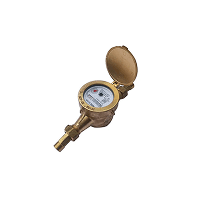
For drinking water lines, modern codes lean away from bare GI on the final stretch because of scaling and taste issues, while lead-free brass remains accepted at fittings and terminal points. On government and PHED tenders across West Bengal, Bihar and Jharkhand, the standard pattern is GI or HDPE for distribution with brass ferrules and bibcocks at every house connection — precisely the pipes-plus-fittings split this guide recommends. A water meter with a brass body at the connection completes the compliant setup.
Maintenance and repair over the years
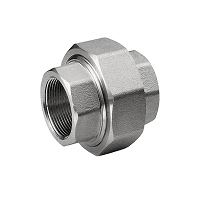
The two materials also age differently in the hands of a maintenance team. A GI section that scales or corrodes is usually cut out and replaced — cheap in parts, disruptive in labour, since threading new pipe into an old run means draining and opening the line. Brass components at connections are designed for service: a bibcock washer, a union or a meter coupling can be swapped in minutes with the isolation valve closed. That is a strong argument for putting brass at every point you expect to touch again, and GI only where you genuinely intend to leave the line alone for a decade.
- Plan GI runs with unions at intervals so future repairs don't mean cutting pipe.
- Keep a small stock of brass spares — washers, unions, one bibcock — per building handed over.
- When old GI starts weeping at multiple points, budget replacement, not patching; scaling is systemic, not local.
How they work together
A typical FHTC (Functional Household Tap Connection) illustrates the partnership: the distribution main is HDPE or GI, a brass ferrule taps the main, GI pipe carries the riser up the wall, and a brass bibcock delivers water at the tap. Four materials decisions, each made on merit — and the system outlives any single-material shortcut.
Procurement follows the same split. Contractors increasingly buy HDPE pipes online in coil quantities for the mains, then source GI pipe and brass water supply fittings together from a local supplier so threads, sizes and standards arrive matched — the combination order is where a full-line yard earns its keep.
A quick costing illustration
Put rough numbers on a single house connection and the economics become obvious. The GI riser might cost a few hundred rupees of pipe; the brass at its two ends — ferrule at the main, bibcock at the tap — costs a similar amount for a fraction of the metal. Doubling the brass budget changes the total connection cost by a few percent. Halving it, with soft-thread bargain fittings, risks the two joints that cause nearly all call-backs. Spend where the leaks live.
Quick comparison
The bottom line
If you came here to settle GI pipe vs brass as a contest, the honest answer is that a good system uses both. Choose GI for the metres and brass for the moments that matter. For fittings-level material selection — brass vs GI fitting by fitting — our earlier guide on brass vs GI fittings drills into that decision, and our pipe sizing how-to covers getting the diameters right.
Metplast stocks GI pipes, brass water supply fittings, ferrules, bibcocks and meters as a full-line pipes supplier in Kolkata, with delivery to Patna and Ranchi. Send us your requirement and we will quote the complete GI-plus-brass package for your project.