Most articles about plumbing mistakes talk about over-tightened joints and forgotten sealant — and our earlier post on 5 common plumbing mistakes covers exactly those installation slips. But ask any experienced contractor where the really expensive failures come from and they will point further upstream: decisions made at the planning and purchasing stage, weeks before anyone picks up a wrench. As a pipes supplier in Kolkata, we see the same nine project-level mistakes again and again. Here is how to avoid them.
Choosing material by price alone
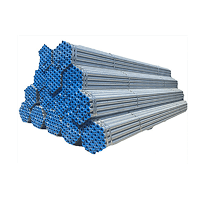
The cheapest pipe per metre is rarely the cheapest system. Unrated PVC on a pumped line, bare GI on a hot-water run, or bargain fittings with soft threads all trade a small saving today for rework tomorrow. Match the material to the water, temperature and location first — our GI pipe vs brass fittings guide walks through that decision — and only then compare prices between options that genuinely qualify.
A useful discipline: when a quote comes in surprisingly low, ask which line item absorbed the cut. It is almost never the pipe metres — those are easy to compare between suppliers. It is the fittings, the valves and the pressure class, the parts nobody checks until they fail. Comparing quotes item-by-item against one written specification keeps every supplier honest and every material decision visible.
Undersizing the line
An undersized main is the mistake you cannot patch later — the whole run has to come out. It usually happens when a branch size gets copied for a riser, or when nobody accounts for simultaneous demand across floors. Ten minutes with our pipe sizing method prevents it entirely.
Ignoring pressure ratings
A system is only as strong as its lowest-rated component. A PN10 HDPE pipe joined with unrated fittings is not a PN10 system, and the failure will find that weakest joint — usually at the worst time. Check the marking on every pipe and fitting against the pressure the pump or mains can actually deliver; our guide to pressure ratings and specifications shows how to read them.
Mixing dissimilar metals directly
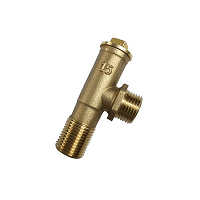
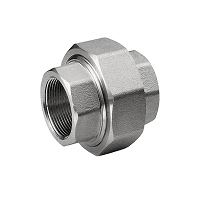
Thread brass straight onto galvanised steel in the wrong conditions and galvanic corrosion starts eating the joint from day one. The fix costs almost nothing at purchase time: proper jointing compound and the right transition pieces, like a GI union or the correct brass FTA, at every metal-to-metal boundary.
Every expensive plumbing failure was once a cheap line item somebody crossed off the purchase order.
Ignoring what is in the water
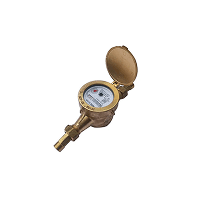
Water chemistry decides how long materials last, yet almost nobody checks it before ordering. Hard borewell water scales GI lines years ahead of schedule and clogs meter mechanisms; aggressive or saline supply attacks zinc coatings and cheap alloys first. If the area's water is known to be hard — and much of eastern India's groundwater is — favour HDPE for the runs, specify quality brass at the connections, and expect to service the water meter more often. A material choice that suits the water costs nothing extra on the purchase order; discovering the mismatch after two monsoons costs a repipe.
Skipping isolation valves
A system with no isolation points cannot be repaired without shutting everything down. The result: a single washer change drains the whole building's supply. Specify a valve or bibcock at every branch you may ever need to service — tanks, meters, geysers, each bathroom — while the walls are still open. The cost asymmetry is stark: a valve added at construction is a minor line item; the same valve retrofitted later means breaking finished tile, draining the system and a plumber's day rate. Nobody has ever regretted an isolation valve.
Leaving the meter and ferrule as an afterthought
House connections fail disproportionately at the tapping point, because the ferrule and meter get picked last and cheapest. A compliant brass ferrule and an IS 779 water meter cost little against the whole project and are what the water board inspects first on FHTC work.
Commissioning without a flush
The last mistake happens after everything is installed correctly: connecting meters and taps to an unflushed line. Construction debris — thread cuttings, sand, sealant fragments — travels straight into meter mechanisms and valve seats, and the damage reads as "faulty product" when it is really a skipped step. Flush every new line to a clean run of water before the meter and terminal fittings go on. It takes minutes and saves the first service visit.
Buying without a material list
Site-by-site, WhatsApp-order procurement guarantees two things: missing fittings on installation day and duplicate stock in the store room. Build one consolidated material list per project — pipes, water supply fittings, valves, meters — and order it as a single quote so nothing arrives mismatched. This applies however you purchase: whether you buy HDPE pipes online in coil quantities or collect GI and brass over the counter, one list against one quote is what keeps sizes, threads and pressure classes consistent across the job.
Pre-project checklist
Get the order right, and the site follows
None of these mistakes require skill to avoid — only a little planning before the purchase order goes out. Send us your material list through the contact page and our team will check sizes, ratings and compatibility before you buy, with delivery across Kolkata, Patna and Ranchi.