Ask three plumbers what size pipe a job needs and you may get three different answers — usually based on what worked last time. Pipe sizing does not need to be guesswork. Whether you buy HDPE pipes online or pick up GI from a local pipes supplier in Kolkata, the same four questions decide the right diameter: how much water, how far, at what pressure, and through what material.
Start with demand, not diameter
Every sizing decision begins with peak demand — the most water the line must deliver at once. Count the fixtures the pipe serves and think about how many run together in real life. A single bathroom rarely runs the shower, basin and flush at the same moment; a site hostel with ten taps in a row absolutely will.
- One or two fixtures on a short branch: 15mm (1/2 inch) is usually enough.
- A full bathroom or kitchen line: 20mm (3/4 inch) keeps flow steady when two outlets run together.
- Risers and building mains feeding several bathrooms: 25mm (1 inch) and up.
- Distribution from tanks or borewells to multiple buildings: 32mm and above, sized on total simultaneous demand.
The common mistake is copying the size of the pipe you are connecting to. A 25mm main does not mean every branch needs 25mm — branches should step down as demand splits.
Respect pressure and length
Water loses pressure to friction every metre it travels, and the loss rises steeply as diameter shrinks. A size that works over 5 metres can starve a fixture over 50. Two rules of thumb keep you safe on typical low-rise work.
- For runs longer than about 30 metres, move up one size from the demand-based choice.
- For upper floors fed by gravity tanks, remember that every metre of height costs roughly 0.1 bar — undersized risers make top-floor showers a trickle.
Pressure rating matters as much as diameter. Pipes carry a PN class — PN10 handles 10 bar, comfortably above what most municipal or tank-fed systems see. If you are pumping, check the pump's shut-off head against the pipe class before you order. Our guide on understanding water pressure ratings and pipe specifications covers how to read these markings in detail.
Size for the farthest fixture on the worst day — everything closer will take care of itself.
Match the material to the job
Diameter and material are decided together, because materials come in different standard sizes and behave differently over time.
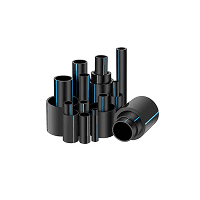
- HDPE pipe is flexible, corrosion-proof and ideal for buried supply lines, irrigation and long external runs — a 25mm PN10 coil covers most site supply work.
- GI pipe suits exposed, above-ground and structural runs where mechanical strength matters; pair it with quality water supply fittings at every joint.
- uPVC pipe is economical for cold-water distribution and drainage where UV exposure is limited.
GI can scale internally over years of hard-water service, which effectively shrinks its bore. If your water is hard and the run is small-diameter, either upsize the GI or switch the line to HDPE. The choice between metals is its own topic — see our comparison of GI pipe vs brass fittings for where each wins.
A worked example
Take a two-storey house in Kolkata with a rooftop tank, two bathrooms per floor and a kitchen. The tank outlet and vertical riser serve everything, so they get 25mm. Each floor branch feeds two bathrooms, so 20mm handles the simultaneous shower-plus-tap case. Individual fixture branches — basin, flush, geyser — drop to 15mm for the last metre or two. The external line from the municipal connection to the tank runs 40 metres underground, so a 25mm HDPE line with a brass ferrule at the tapping point keeps friction losses acceptable.
That is the whole method: demand sets the base size, length and height push it up, and material picks the standard you buy.
Common scenarios at a glance
Most day-to-day sizing questions fall into a handful of patterns, and it helps to sanity-check your arithmetic against them.
- Single tap or FHTC house connection off a distribution main: 15mm service line with a matching ferrule and saddle at the tapping point.
- Apartment bathroom cluster on one floor: 20mm branch, stepping to 15mm at each fixture.
- Rooftop tank outlet and building riser for two to four floors: 25mm, moving to 32mm when bathrooms per floor multiply.
- Borewell to overhead tank with a 1 HP domestic pump: 25mm HDPE keeps friction losses from eating the pump's head.
- Compound or society distribution loop feeding several staircases: 40-63mm HDPE, sized on total simultaneous demand rather than fixture counts.
Treat these as starting points, not answers — a long run, a tall lift or hard water can push any of them up one size. When two sizes both look defensible, take the larger one; the price difference on a typical run is small against a single day of rework.
Ordering quantities without waste
Sizing the diameter is half the purchase; quantity is the other half. Pipes sell in standard lengths and coils, and fittings in minimum order steps, so a precise cut-list still needs rounding.
- Measure actual routed length from drawings — including vertical drops — not straight-line distance.
- Add 5-10% for cuts, wastage and the reroute someone will improvise on site.
- Count one fitting per direction change and per branch, then add spares; running short of elbows stops work faster than running short of pipe.
- Order pipe, water supply fittings, valves and the meter in one consolidated list so sizes arrive matched.
Pipe sizing checklist
Get the fittings right too
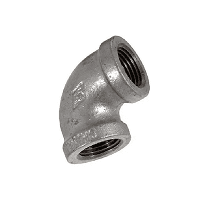
An accurately sized pipe still underperforms through undersized or poor-quality fittings. Keep fittings the same nominal size as the pipe, use full-bore valves on mains, and avoid unnecessary elbows — each 90° bend adds the friction of several metres of straight pipe. Quality water supply fittings cost a little more per joint and repay it every year the system runs leak-free.
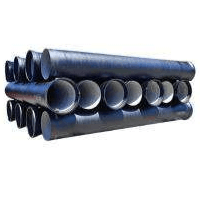
If you are unsure between two sizes for a specific project, talk to our team — Metplast supplies HDPE, GI, uPVC and DI pipes with matching fittings across Kolkata, Patna and Ranchi, and we will help you spec the line before you order.