Every pipe on a dealer's rack carries a line of printed code — material grade, standard number, pressure class, size. Most buyers skip past it and order by diameter and price. Then a line bursts at the pump, or an inspector rejects a lot mid-project, and that ignored marking suddenly becomes very expensive. Ten minutes with this guide and you will read pipe specifications like a supplier does.
What a pressure rating actually means
The PN number — PN6, PN8, PN10, PN16 — states the maximum continuous working pressure in bar at 20°C. A PN10 HDPE pipe is built to carry 10 bar of water pressure, day in and day out, for its design life.
To put that in context, pressures you will actually meet on site are usually modest.
- Municipal mains in most Indian cities: 1 to 4 bar.
- A rooftop tank: roughly 0.1 bar per metre of height — a 10-metre-high tank delivers about 1 bar.
- Small borewell and booster pumps: 2 to 6 bar, but check the shut-off head.
- Water hammer from fast-closing valves: brief spikes several times the static pressure.
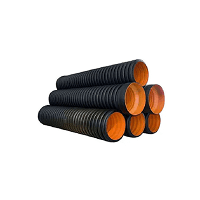
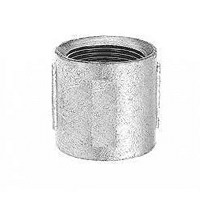
That last item is why systems are specified with headroom. A line that idles at 3 bar can see far more for a split second when a valve slams. PN10 has become the default class for supply work precisely because it absorbs those realities with margin to spare — the pipe network behind most FHTC schemes is PN10 HDPE with brass water supply fittings at the connections.
The standards behind the codes
The IS number tells you which rulebook the pipe was made to, and it is what a project inspector will check against the tender spec.
- IS 4984 — HDPE pipes for water supply: dimensions, material grades like PE100, and pressure classes.
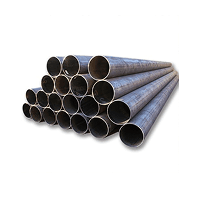
- IS 1239 — mild steel and GI pipe: the familiar Light, Medium and Heavy classes.
- IS 4985 — uPVC pipes for potable water, such as a standard uPVC line.
- IS 779 — domestic water meters; a compliant water meter will carry its class letter as well.
- IS 2692 — ferrules for house connections, the small brass component with an outsized role.
For GI, the class system replaces PN: Light (yellow band), Medium (blue) and Heavy (red) indicate wall thickness. Medium class is the usual choice for building water supply; Heavy earns its cost on buried or high-stress runs.
The marking on the pipe is the manufacturer's promise in writing — a pipe with no marking is a pipe with no promise.
Reading a pipe marking
Take a typical printed line: HDPE PE100 25mm PN10 IS 4984. That reads as material and grade (PE100 — the stronger, modern polymer), outer diameter (25mm), pressure class (10 bar continuous), and governing standard. On GI you will see the maker's brand, IS 1239 and the class band painted on the pipe end. If any element is missing — especially on a price that looks too good — you are looking at unrated stock, and it has no place on a water line you will be answerable for.
Temperature changes the maths
Every PN rating is quoted at 20°C, and plastic pipe loses pressure capacity as water warms. By around 40°C, an HDPE line should be treated as roughly three-quarters of its rated class, and hot-water service is simply outside HDPE and uPVC's brief — that side of the system belongs to metals or purpose-made polymers. In practice this matters most on rooftop runs in summer, where exposed dark pipe can sit well above ambient temperature all afternoon. Bury the line, shade it, or size one class up; and never spec plastic on the geyser side of the system. Metal choices bring their own trade-offs, which our GI pipe vs brass fittings comparison covers in detail.
PN, SDR and wall thickness
On HDPE datasheets you will also meet SDR — the ratio of diameter to wall thickness. The two express the same engineering from opposite ends: for a given material grade, a lower SDR means a thicker wall and a higher PN class. Two useful consequences follow. First, a PN10 pipe in PE100 has a thinner wall — and more bore — than PN10 in the older PE80 grade, which is one reason modern tenders specify PE100. Second, wall thickness is your quickest field check against counterfeit stock: calipers on a cut end will expose a "PN10" pipe with a PN6 wall in seconds, no lab required.
Matching the spec to the job
Specification is just pressure arithmetic plus a safety margin. Work out the worst continuous pressure the line will see, add allowance for surge, and pick the class above it.
Specification checklist
That last point trips up more projects than any other: a PN10 pipe joined with substandard fittings is not a PN10 system. Rate the whole path — pipe, fittings, valves and connections — to the same number. Our guides on choosing the right pipe size and GI pipe vs brass fittings cover the other two-thirds of the buying decision.
Buy to the spec, not the price
Two pipes of identical diameter can differ by 40% in price because one is PE100 PN10 to IS 4984 and the other is unrated regrind. The cheap one is only cheap until the first failure. When you buy HDPE pipes online or from a local yard, insist on the marking, and keep a photo of it in the project file — inspectors love it and disputes end quickly.
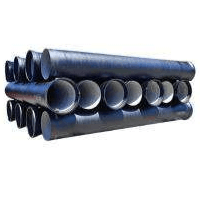
As a pipes supplier in Kolkata serving contractors across Patna and Ranchi, Metplast stocks IS-marked HDPE, GI, DI and uPVC pipe with matched fittings, and every product page lists the standard and rating in its specifications. Unsure what class your project needs? Ask our team — sizing and specification help is part of the quote.