Twenty years ago, plastic water supply meant PVC almost by default. Today, government water schemes, borewell contractors and irrigation projects across eastern India have moved decisively to HDPE — and the reasons are practical, not fashionable. If you are deciding between the two for a supply line, here is the honest comparison, including the cases where PVC still deserves the order.
Flexibility is the game-changer
HDPE (high-density polyethylene) is a flexible pipe; PVC is rigid. That single property drives most of HDPE's advantages on real sites.
- An HDPE pipe comes in long coils — a 25mm line can run hundreds of metres with no joint at all. PVC comes in 3 or 6 metre lengths, each end a potential leak.
- Flexible pipe follows trench contours and curves around obstacles; rigid pipe needs a fitting at every change of direction.
- Ground movement, traffic loading and settlement flex an HDPE line harmlessly. Rigid PVC concentrates that stress at joints and cracks.
- Cold weather embrittles PVC noticeably; HDPE stays tough well below freezing.
Fewer joints is not a small point. Ask any contractor where buried lines fail and the answer is nearly always the same: at a joint. A coiled HDPE run designs the problem out.
Joints: fused versus glued
When HDPE does need a joint, the pipe is heat-fused or fitted with mechanical compression fittings — the fused joint is as strong as the pipe itself. PVC relies on solvent cement: workmanship-sensitive, unforgiving of dust and moisture during installation, and impossible to inspect once made. On pressure mains, that difference shows up directly in leak statistics.
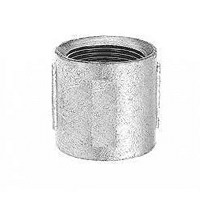
Where an HDPE line meets metal — a valve, a meter, a tap point — compression brass water supply fittings make the transition cleanly and stay serviceable. The choice between metals at those connection points is its own decision; our GI pipe vs brass comparison covers it fitting by fitting.
Durability and service life
Modern PE100-grade HDPE carries a design life of 50 years or more under pressure. It shrugs off the impacts that shatter PVC during transport and backfilling, tolerates water hammer better thanks to its elasticity, and — unlike PVC — degrades slowly under sunlight rather than turning brittle. For the pressure classes themselves, our guide to pressure ratings and pipe specifications explains what PN10 and IS 4984 markings mean on the pipe.
Chemically, both materials resist the water itself — neither rusts nor scales the way metal does — but HDPE tolerates aggressive soils, fertiliser-laden agricultural runoff and saline groundwater with less long-term embrittlement, which is one more reason irrigation and rural water schemes have standardised on it.
Buried and under pressure, the pipe with the fewest joints wins — and HDPE starts the match hundreds of metres ahead.
Cost: look past the rate per metre
PVC is usually cheaper per metre, and on paper that ends many comparisons. On site it rarely survives contact with the full costing:
- HDPE's coils cut fitting counts dramatically — every elbow and coupler PVC needs is money and a future leak path.
- Installation is faster with fewer joints, so labour drops.
- Breakage during handling and transport is near zero for HDPE, a real line item with PVC.
- A repaired or replaced buried line costs many times the original saving.
When you buy HDPE pipes online or from a yard, compare the installed system cost, not the pipe rate — HDPE wins that comparison on most buried supply work.
Handling and storage on site
The difference between the materials continues after delivery. PVC lengths stacked in the sun bow, discolour and grow brittle at the edges; a dropped bundle on a cold morning means cracked ends and wasted metres. HDPE coils shrug off the same treatment — the practical risks are different ones: coils stored on rough ground pick up gouges, and deep scratches beyond about ten percent of wall thickness are cause for cutting out the damaged section. Simple habits cover both materials.
- Store pipe on level, stone-free ground, under shade where possible.
- Keep solvent cement and rubber rings out of direct sun — both degrade quietly.
- Inspect deliveries on arrival, not on installation day; this is doubly true when you buy HDPE pipes online and the transporter is a third party.
- Uncoil HDPE in warm hours; a sun-warmed coil relaxes and lays straight far more willingly.
Where PVC still makes sense
An honest comparison cuts both ways. Rigid uPVC pipe remains a sound, economical choice for above-ground drainage and waste stacks, casing pipe for borewells, and short indoor cold-water runs where its straightness and low cost shine and its joint count stays small. What it should no longer be doing is long buried pressure mains — that job has moved to HDPE for good reason.
Quick decision guide
The bottom line
For pressurised, buried and long-run water supply, HDPE is simply the better engineering choice: fewer joints, tougher pipe, longer life, and a lower installed cost than the rate card suggests. Keep uPVC where rigidity and price genuinely help — drainage, casing, short protected runs — and neither material will owe you an apology. Metplast stocks IS-marked HDPE in standard coils and sizes alongside uPVC, GI and DI pipe, as a pipes supplier in Kolkata delivering across Patna and Ranchi. Unsure which class your scheme needs? Ask our team — we will match the pipe to the project before you order.